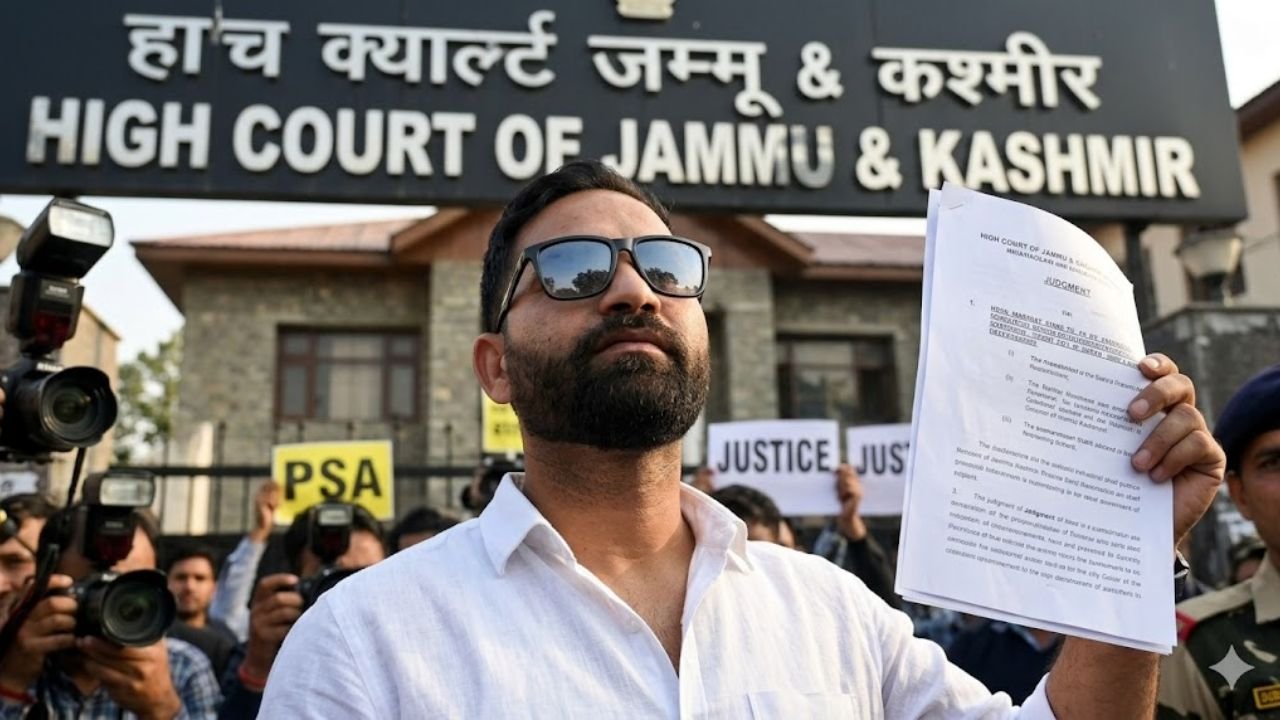
In a significant victory for civil liberties, the High Court of Jammu Kashmir has quashed the PSA detention of Aam Aadmi Party legislator Mehraj Malik, marking a crucial moment in the ongoing debate over preventive detention misuse in India.
What Happened?
On Monday, Justice Mohd Yousuf Wani issued an 87-page judgment setting aside the detention order issued against MLA Mehraj Malik by the Doda district magistrate on September 8, 2025. The court directed authorities to release him immediately from his preventive detention under the Public Safety Act (PSA).
Mehraj Malik, the AAP’s Jammu & Kashmir unit president and MLA for the Doda Assembly constituency, had been detained for allegedly disturbing public order and was subsequently lodged in Kathua jail. However, the High Court of Jammu Kashmir found the detention legally unsustainable and based on what the judge termed “non-application of mind.”
The legal team for MLA Mehraj Malik included Senior Advocate Rahul Pant and other prominent lawyers, with key submissions made by Adv. Appu Singh Slathia and Adv. Zulkarnain Choudhary
AAP spokesperson Appu Singh Slathia said on Monday, “The court has pronounced its judgment in Mehraj Malik’s case. His PSA has been quashed.” The spokesperson added that the judgment “bolsters our faith in the judiciary”.
Mehraj Malik Says Political Space Shrinking, Urges Youth To Join Him In Seeking Change
After his release from Kathua jail, AAP MLA Mehraj Malik has reignited the conversation around PSA detention in Jammu and Kashmir, calling it a misuse of legal tools to suppress voices. His freedom follows a landmark decision by the Jammu and Kashmir High Court, which quashed his detention under the Public Safety Act (PSA).
Speaking to the media, Malik emphasized that political engagement in India remains the only path to meaningful change. Despite legal hurdles, he reaffirmed his commitment to public welfare in Jammu and Kashmir, stating that his struggle is driven by ideas, not political ambition.
Highlighting the need for unity, Malik urged citizens to rise above religious divides and focus on humanity. He also encouraged youth participation, stressing that the future of governance depends on active involvement from young minds.
Addressing key concerns, Malik pointed to unemployment among youth in J&K as a pressing issue, overshadowing other initiatives. He criticized the lack of vision in policymaking and called for reforms rooted in accountability and performance.
“Thoughts cannot be imprisoned,” Malik said, reinforcing that democracy must allow space for dissent and reform.
Understanding the Legal Distinction in Mehraj Malik’s PSA Detention: Law and Order vs. Public Order
One of the most critical aspects of this judgment is the court’s emphasis on distinguishing between “law and order” and “public order”—a distinction that has profound implications for future preventive detention cases.
The court observed that the material on record did not justify invoking preventive detention, noting that Mehraj Malik’s alleged activities did not amount to “public disorder.” More significantly, the court found “no live link or proximity between the alleged criminal activities and the need for passing of the impugned detention order.”
This distinction is crucial because the PSA can only be invoked when there is a genuine threat to public order—not merely routine law and order violations.
The High Court of Jammu Kashmir’s Key Findings in Mehraj Malik’s PSA Detention
In its judgment, the High Court of Jammu Kashmir highlighted several damning conclusions:
- Routine Law and Order Issues: Almost all criminal cases against Mehraj Malik pertained to normal violations, including election-related matters—hardly grounds for preventive detention.
- Absence of Credible Threat: The court stated it was “not of the opinion that there was any apprehension that the detenu is likely to act in any manner prejudicial to social disorder.”
- Non-Application of Mind: Rather than attributing the detention to malice, the High Court of Jammu Kashmir found that the detaining authority simply failed to apply its mind properly to whether the PSA grounds were actually met.
Preventive Detention Under the Public Safety Act: A Permissible Exception Gone Wrong
The Public Safety Act allows detention without charge or trial for up to two years in some cases—a provision designed for genuine threats to public order. However, this ruling exposes how this stringent law has been repeatedly misused.
Justice Wani reiterated that preventive detention is “a permissible exception to the precious fundamental right guaranteed under Article 21” of the Indian Constitution. Yet, he emphasized that this exception “cannot be allowed to be misused for any reasons beyond the scope of the special legislation.”

Political and Public Reaction to Mehraj Malik’s Release
The verdict has sparked significant reactions across the political spectrum:
Chief Minister Omar Abdullah stated: “He (Mehraj Malik) should never have been detained under PSA, in fact he should never have been detained at all. His detention was a gross misuse of this law (PSA) and totally unjustified.”
CPI(M) leader M Y Tarigami called the judgment a victory for justice, stating: “He was wrongly booked under the draconian law that has been repeatedly misused in the past and continues to be misused, once again highlighting the urgent need for its revocation.”
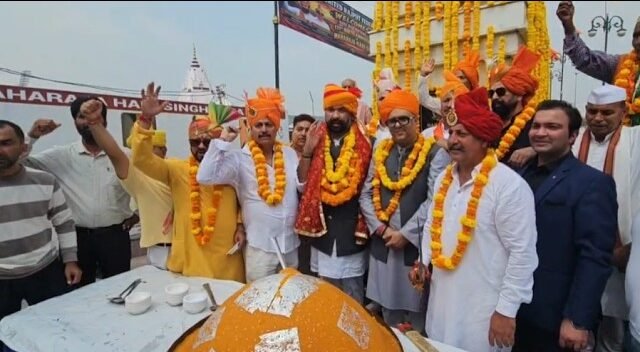
In Mehraj Malik’s home constituency of Doda, celebrations erupted as hundreds of supporters burst firecrackers and raised slogans—a powerful statement about public sentiment regarding his detention.
The Habeas Corpus Petition: A Safeguard That Worked
Mehraj Malik’s legal battle began when he filed a habeas corpus petition on September 24, challenging his detention and seeking Rs 5 crore as compensation. The High Court of Jammu Kashmir reserved its order on February 23, ultimately delivering justice in favor of constitutional protections.
This case underscores the critical importance of habeas corpus petitions as a legal safeguard against arbitrary detention—a fundamental tool for protecting citizens’ rights under the Constitution.
What This Means for the Future
This landmark ruling sends a clear message: authorities cannot invoke the PSA for routine law and order violations. The High Court of Jammu Kashmir has effectively raised the bar for what constitutes a genuine threat to public order, making it harder for the government to justify preventive detention misuse based on flimsy grounds.
The distinction between “law and order” and “public order” will likely become the cornerstone for future PSA detention cases, potentially protecting citizens from arbitrary use of this controversial law.
The quashing of Mehraj Malik’s detention by the High Court of Jammu Kashmir is more than a personal victory—it’s a landmark ruling that reaffirms the supremacy of constitutional rights and the limits of government power. As preventive detention misuse continues to be debated, this judgment serves as a powerful reminder that the judiciary stands as a guardian of fundamental freedoms.
The Mehraj Malik case demonstrates that even in the face of stringent laws like the PSA, the constitutional framework provides recourse through habeas corpus petitions and judicial review. For citizens concerned about arbitrary detention, this ruling offers hope and a legal precedent for challenging unlawful preventive detention.