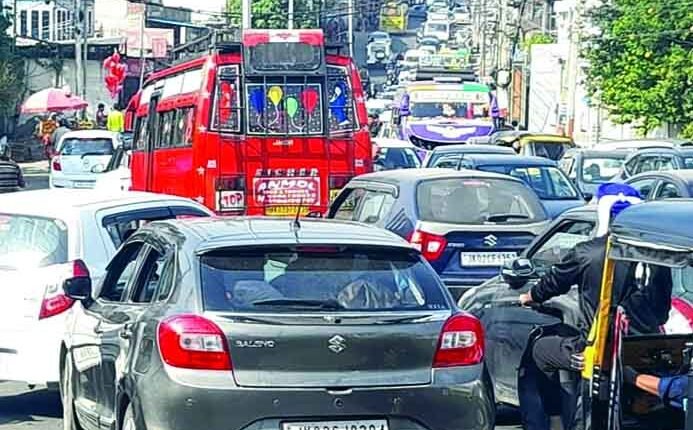
If you travel daily across Jammu and Kashmir, your commute is about to get costlier. The government has officially approved an 18% passenger fare hike in Jammu and Kashmir (2026), impacting buses, taxis, auto-rickshaws, and even tourist vehicles.
The Jammu and Kashmir fare hike 2026 has been implemented through a fresh notification issued by the State Transport Authority.
This revision applies to:
- Big and mini buses
- Contract carriage taxis
- Medium & premium tourist vehicles
- Auto-rickshaws
- Stage carriage vehicles
- Electric vehicles (new category introduced)
One major highlight: separate fare structures for electric vehicles (EVs) have now been introduced, promoting cleaner transport options.
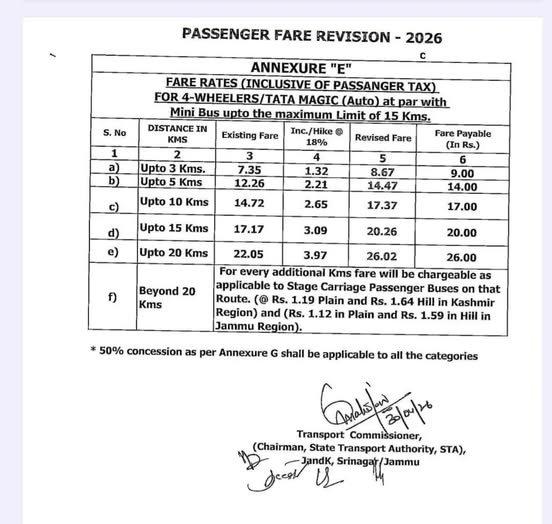
Updated Fare Structure for 4-Wheelers (Including Tata Magic)
The revised fares for 4-wheelers like Tata Magic and mini-buses are now aligned up to a distance of 15 km.
New Fare Slabs (Inclusive of Passenger Tax)
- Up to 3 km → ₹9
- Up to 5 km → ₹14
- Up to 10 km → ₹17
- Up to 15 km → ₹20
- Up to 20 km → ₹26
This reflects a gradual increase of ₹1.32 to ₹3.97, depending on distance. Per Kilometre Charges Beyond 20 KM
For longer journeys, fares will now follow a per-kilometre system based on region and terrain:
Kashmir Region:
- Plains → ₹1.19/km
- Hilly terrain → ₹1.64/km
Jammu Region:
- Plains → ₹1.12/km
- Hilly terrain → ₹1.59/km
This ensures a more balanced pricing structure considering road conditions and travel difficulty.
Focus on Electric Vehicles (EVs)
A notable step in the Jammu Kashmir transport policy update is the introduction of separate EV fares. This move is expected to:
- Encourage eco-friendly commuting
- Support EV adoption in public transport
- Reduce long-term fuel dependency
For regular passengers, this Jammu and Kashmir bus fare increase will:
- Slightly raise daily travel expenses
- Impact long-distance commuters more
- Encourage shift toward shared or EV transport
However, the structured fare slabs help maintain transparency and predictability in pricing.
The passenger fare hike in Jammu and Kashmir 2026 brings a balanced but noticeable increase across all major transport modes. While it may pinch daily commuters, it also signals modernization with EV inclusion and better fare structuring.