Every year, millions of devotees undertake the sacred Amarnath Yatra, a journey that tests both faith and endurance. But beyond the snow-covered mountains, steep trekking routes, and the revered Holy Cave lies another inspiring story—one of compassion, community, and selfless service.
As Amarnath Yatra 2026 begins, over 122 authorised langars (community kitchens) have come together to ensure that no pilgrim goes hungry or lacks a place to rest. These volunteer-run centres are providing free meals, accommodation, drinking water, medical assistance, and emotional support, making them one of the strongest pillars of the annual pilgrimage.
More Than a Meal: Langars Are the Lifeline of the Amarnath Yatra
For thousands of Amarnath Yatra pilgrims, the journey is physically demanding. Trekking through high altitudes and unpredictable weather requires energy, preparation, and reliable support.
This is where Amarnath Yatra langars make a remarkable difference.
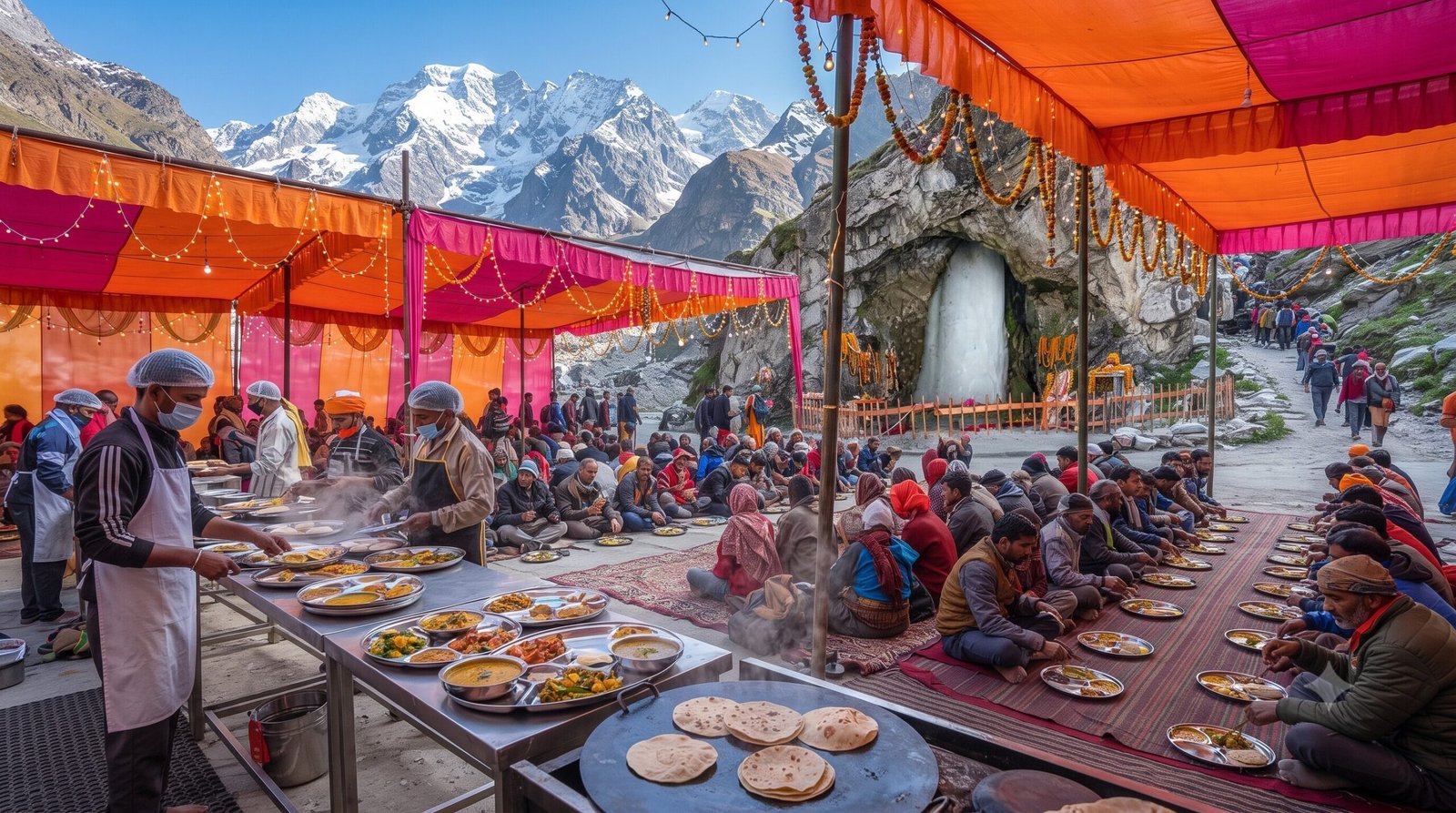
Running 24 hours a day, these camps serve fresh vegetarian meals, provide clean drinking water, arrange sleeping facilities, and even offer mobile charging points. Every service is completely free, regardless of a pilgrim’s religion, language, or financial background.
The result is a pilgrimage strengthened not just by devotion, but also by humanity.
122 Langars Approved for Amarnath Yatra 2026
The Shri Amarnath Shrine Board (SASB) has authorised 122 langar organisations along both pilgrimage routes:
- Pahalgam Route
- Baltal Route
The largest contribution comes from Punjab, with 44 langars managed by religious and social organisations. Delhi and Haryana together account for another 46 langars, while volunteers from Uttar Pradesh, Gujarat, Chandigarh, Himachal Pradesh, and Jammu & Kashmir are also actively participating.
Together, these organisations represent thousands of volunteers dedicated to serving fellow pilgrims.
24/7 Free Food, Shelter and Medical Support
The Amarnath Yatra food facilities go far beyond serving meals.
Pilgrims visiting these camps receive:
- Fresh vegetarian food
- Purified drinking water
- Free accommodation
- Mattresses and blankets
- Medical assistance
- Mobile charging facilities
- Information and guidance
- Emergency support
Most langars are capable of serving 3,000 to 4,000 people every day, ensuring that devotees can continue their journey with renewed energy.

Healthy Food Takes Priority
Following health concerns during previous yatras, the Shri Amarnath Shrine Board has introduced strict dietary guidelines.
To promote safer travel, langars have been instructed to prepare only nutritious food.
The approved menu includes:
- Rice
- Pulses
- Whole grains
- Green vegetables
- Potatoes
- Soya chunks
- Fruits
- Sprouts
- Oil-free rotis
Notably, junk food has been completely prohibited along the pilgrimage route. The move comes after several cardiac-related incidents reported in recent years and reflects the Board’s emphasis on pilgrim well-being.
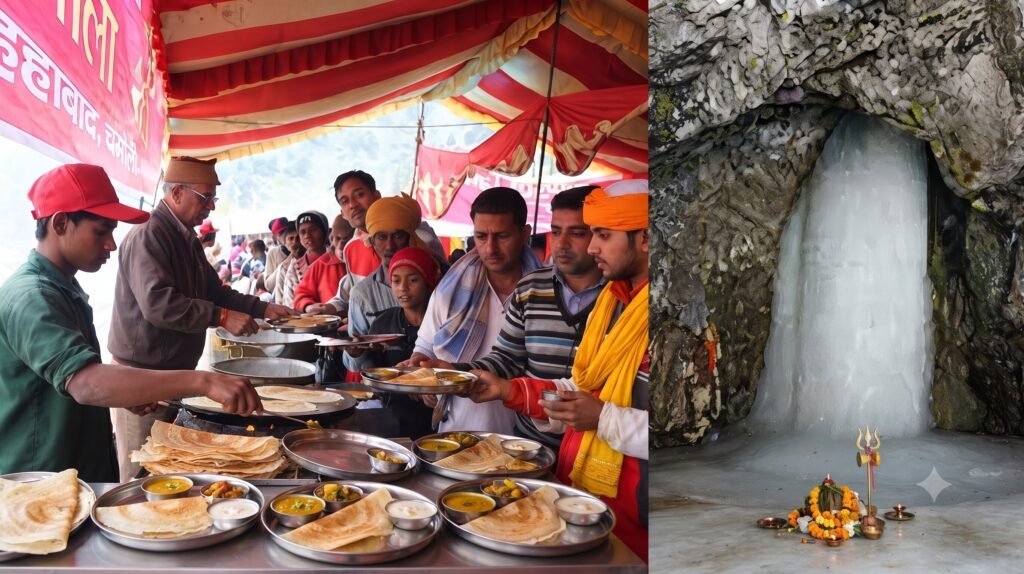
24-Hour Langars, Free Stay & Selfless Service: Inside Amarnath Yatra
Where Are the Langars Located at Amarnath Yatra Root?
Pilgrims can find Amarnath Yatra accommodation and food services at almost every major stop.
Base Camps
- Bhagwati Nagar, Jammu
- Ramban
- Nunwan (Pahalgam)
- Baltal
Highway Camps
- Chanderkote
- Lamber (Banihal)
- Tikri
- Jammu-Pathankot National Highway
- Jammu-Srinagar National Highway
High-Altitude Camps
- Chandanwari
- Sheshnag
- Panjtarni
- Near the Holy Cave Shrine
These strategically located camps allow devotees to rest, eat, and recover throughout the journey.
Thousands of Volunteers Working Around the Clock
Each langar typically operates with 60 to 70 volunteers, many of whom travel hundreds of kilometres carrying food supplies, cooking equipment, tents, and essential materials.
Months of planning go into establishing each camp before the pilgrimage officially begins.
Volunteers work in shifts around the clock, cooking, cleaning, serving meals, guiding pilgrims, and responding to emergencies.
“We Have Been Serving for 20 Years”
Raman Kumar, who has organised a langar for nearly two decades, says the service is driven purely by devotion.
“We have been running this langar for almost 20 years. Everything here is completely free. People come from distant places with faith in their hearts. Some donate voluntarily, but we never expect anything in return.”
Another organiser from Delhi shared that his team regularly shifts its langar between Baltal and Chandanwari depending on permissions.
He praised the security arrangements and encouraged pilgrims to follow official safety guidelines throughout the journey.
Langars Become Information and Help Centres
Beyond serving food, many langars function as informal assistance centres.
If a pilgrim is separated from family members, loses belongings, or requires urgent help, volunteers quickly circulate information among nearby camps and coordinate with the administration.
According to volunteer Kavitesh, communication between langars often helps reunite missing pilgrims and resolve emergencies faster.
This community network has become an invaluable part of the Amarnath Yatra facilities.

A Journey That Unites Communities
One of the most inspiring aspects of the pilgrimage is the spirit of unity.
Volunteers from different states, faiths, and backgrounds work together in service. Local residents, including members of the Muslim community, also extend support to pilgrims.
Rasool Ahmad, a pony operator, says community kitchens transcend religious boundaries as local Muslims often help ensure pilgrims never go hungry.
At the Baltal base camp, volunteer Nath Singh echoed the same sentiment, saying everyone is welcome at the langar regardless of religion or background.
Such moments remind visitors that service often becomes the strongest expression of faith.
Pilgrims Appreciate the Selfless Service
Many devotees describe the langars as one of the most memorable parts of their journey.
Pilgrim Sandeep Meigi expressed gratitude to the volunteers who tirelessly provide food, drinking water, blankets, and shelter throughout the pilgrimage.
After long hours of trekking, these facilities offer not only physical comfort but also emotional reassurance.
Some camps even organise devotional music and cultural programmes in the evenings, giving pilgrims a chance to relax before continuing their journey.
Important Travel Update for Amarnath Yatra 2026
Authorities have confirmed that helicopter services will not operate during Amarnath Yatra 2026.
Pilgrims are advised to plan their travel accordingly, follow official advisories issued by the Shri Amarnath Shrine Board, and prioritise their health and safety throughout the pilgrimage.
The Spirit That Keeps the Yatra Moving
The Amarnath Yatra is celebrated for its spiritual significance, but it is equally defined by countless acts of kindness that happen quietly every day.
From volunteers preparing meals before dawn to strangers offering blankets on cold mountain nights, the langars represent India’s enduring tradition of seva—selfless service without expectation.
As thousands make their way towards the Holy Cave in 2026, these community kitchens continue to nourish more than just bodies. They strengthen faith, foster unity, and remind every traveller that the journey is shared.
For many pilgrims, the memory of a warm meal served with a smile becomes just as unforgettable as the darshan itself.