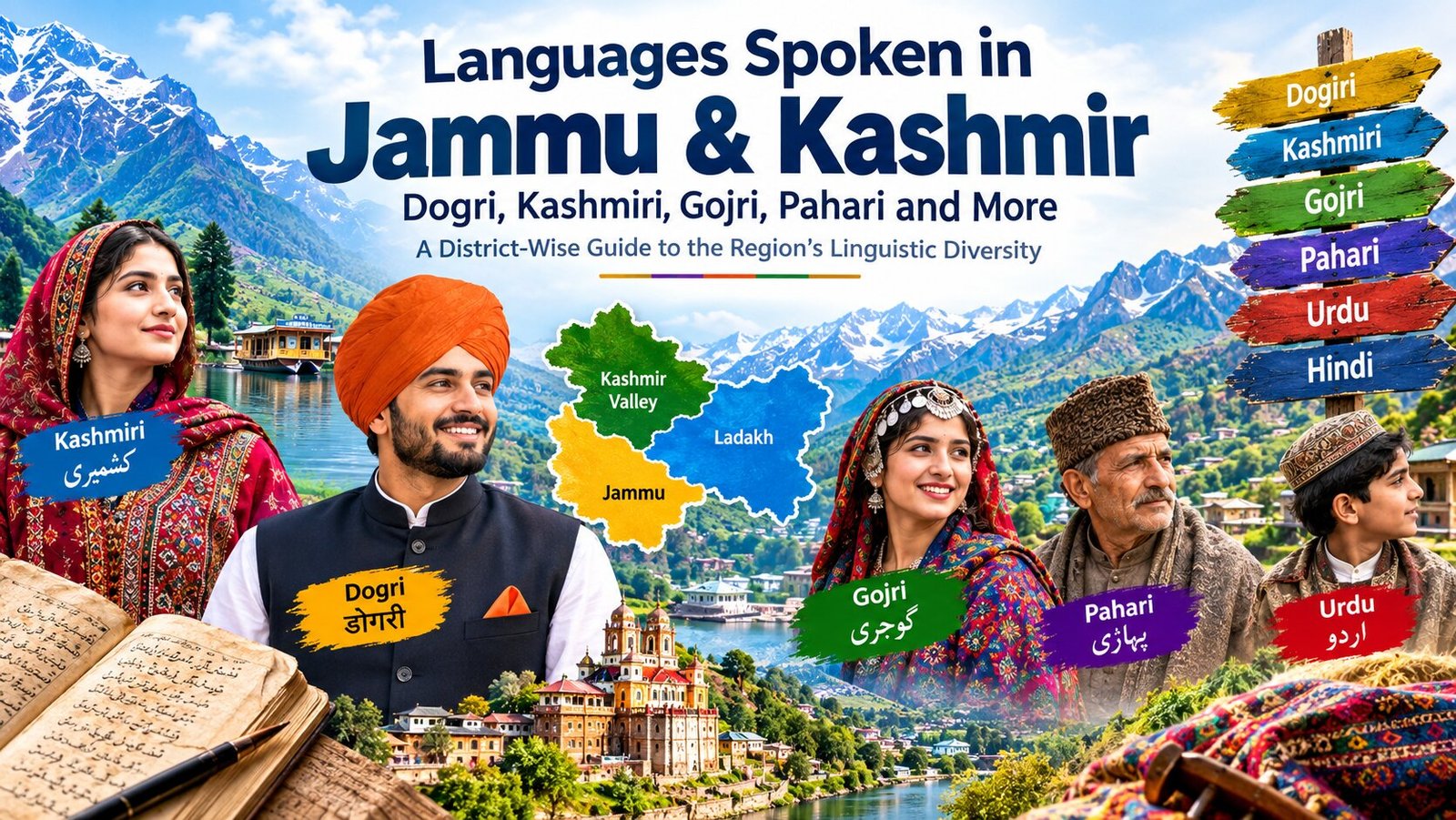
In the heart of Jammu’s rich cultural heritage lies a forgotten treasure—Takri: Dogri language script, the traditional script of the Dogri language. Once widely used across the region, this script is now slowly fading from memory. But a growing movement is working to bring it back into the spotlight.
Dogri is written from left to right. Traditionally, it was written in the Takri script, while today it is primarily written in Devanagari. Unlike Devanagari, the Takri script generally does not use a continuous horizontal line (shirorekha) to connect letters.
Let’s explore the fascinating journey of Takri script, its deep roots in Dogra region:
What is Takri Script?
Dogra Akkhar, a regional form of the Takri script, was historically used to write the Dogri language. Before the widespread adoption of Devanagari, Dogri was primarily written in this indigenous script Takri.
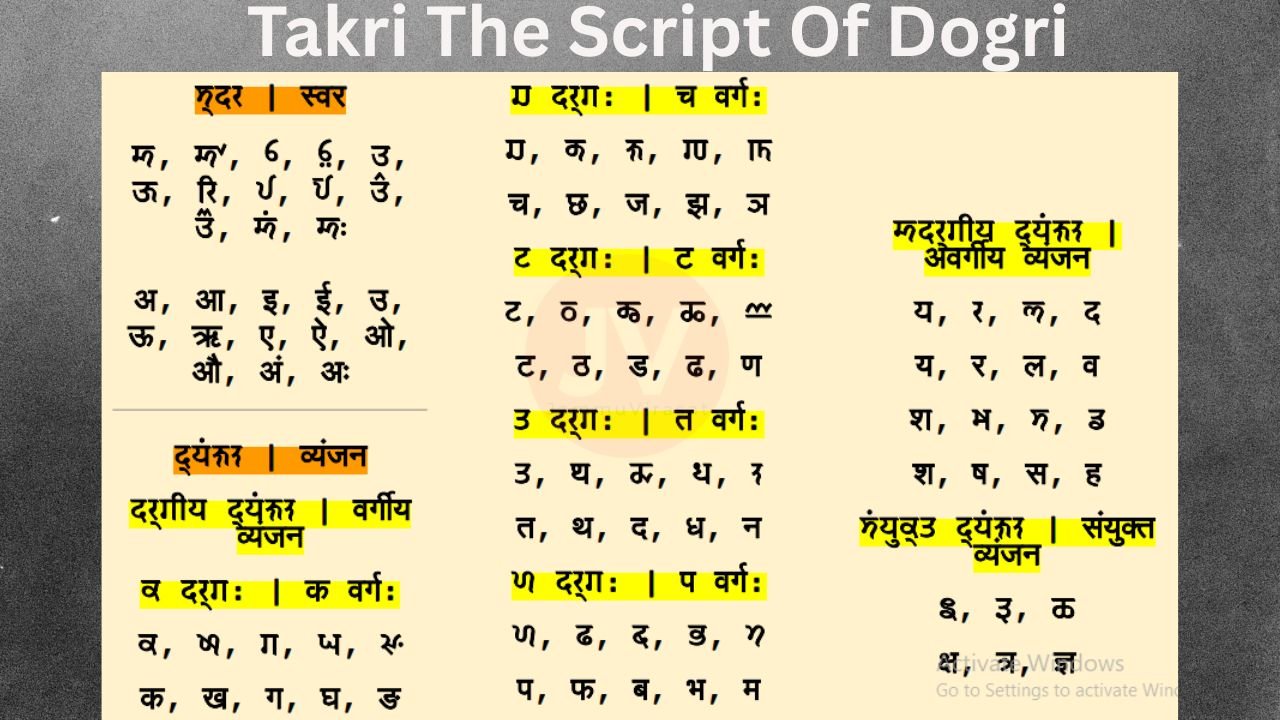
Takri belongs to the Brahmic family of alphabets, evolving from the ancient Sharada script through the Devasesa stage. It features:
- 12 vowels
- 37 consonants
This structured system made it suitable for both literary and administrative use.
A Script Preserved in Art and History
One of the most beautiful aspects of Takri inscriptions is their presence in traditional art. These inscriptions can often be seen on:
- Borders and backs of Pahari miniature paintings
- Iconic Basohli paintings
Many of these masterpieces are preserved at the Dogra Art Museum, offering a glimpse into Jammu’s artistic and linguistic legacy.
Additionally, Takri was widely used in:
- Temple inscriptions
- Old bahi khatas (traditional business ledgers)
- Revenue and administrative records
Golden Era Under Maharaja Ranbir Singh
The reign of Maharaja Ranbir Singh marked a golden period for Dogra Akkhar.
During this time:
- The script was standardized and declared official in the state.
- Dogri became a co-official language alongside Persian.
- The script was used in books, coins, banknotes, and postage stamps.
- Educational institutions began teaching Dogra Akkhar to the elite.
A refined version called Namay Akkhar was introduced under the guidance of Vishweshwar Jyotshi.
Several important texts were translated and published in Takri through the Vidya Vilas Press, including:
- Ranbir Chikitsa
- Vyavhar Gita
- Lilavati
- Ranbir Dand Vidhi
Decline of Takri Script
Despite its prominence, the decline of Takri Script began after 1885:
- Following the death of Maharaja Ranbir Singh, Urdu was adopted as the official language under British influence.
- The use of Dogra Akkhar gradually diminished in administration and education.
- In 1944, a major shift occurred when the Dogri Sanstha decided to adopt Devanagari as the official script for Dogri.
This decision led to the near disappearance of Takri from everyday use.
Forms of Takri Scripts in Dogra Region
Takri writing in Jammu region evolved into two main forms:
- Old Dogri (Ganmat)
- New Dogri (Namay Akkhar / Dvigrit Akkhar)
Each form reflects different stages of linguistic and cultural development in the region.
Revival of Takri Script: A Cultural Awakening
Although delayed, efforts to revive Dogra Akkhar are finally gaining momentum.
Today, passionate individuals and communities are working to preserve this script through digital platforms. Social media initiatives like:
are actively promoting awareness and teaching the basics of Takri to a new generation.
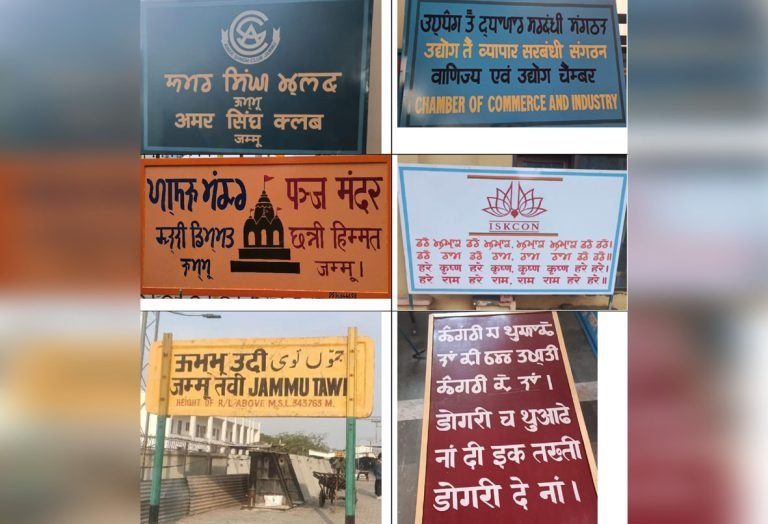
Takri Script is more than just a script—it is a symbol of Jammu’s rich heritage and identity. While history may have pushed it into obscurity, the present offers a chance to bring it back.
The question is—are we ready to embrace our roots and let takri shine again?
Note: We always welcome inputs. The above information has been gathered from online resources, particularly regarding Takri alphabets. If any improvements or corrections are required, kindly email us at info@jammuvirasat.com with supporting documents. This content may be further refined and updated.