A few years ago, the 20-kanal stretch at Kot Bhalwal on the outskirts of Jammu was a place most people avoided.
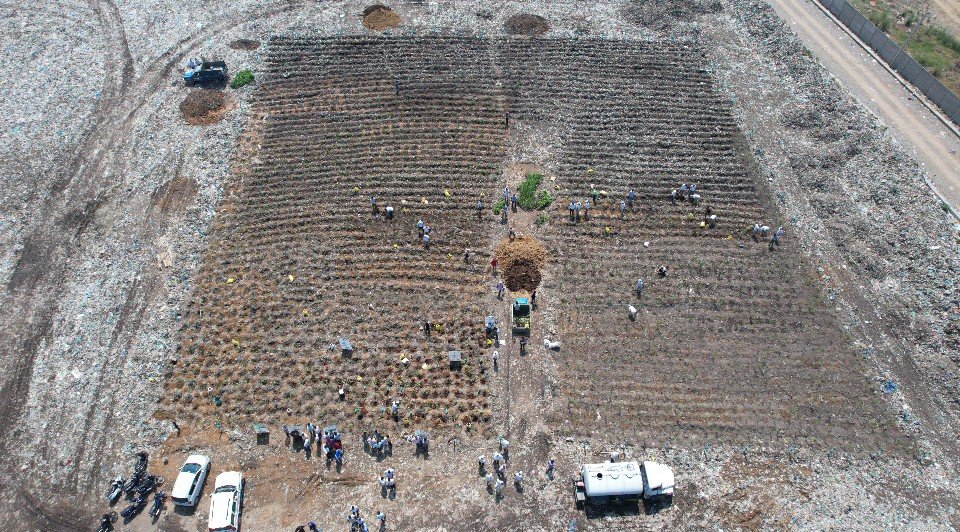
Mounds of unprocessed waste lay scattered across the land, carrying the familiar sights and smells of a dumpsite that had long outlived its purpose. Today, if all goes as planned, the same patch of land will be home to 5,000 trees, turning what was once a symbol of urban neglect into a thriving green space for the city.
At the heart of this transformation is Dr Devansh Yadav, IAS, Commissioner of the Jammu Municipal Corporation (JMC), who, along with officials from the Forest Department and JMC, has led an effort that shows how cities can reclaim damaged landscapes and give them a second life.
The challenge itself is not unique to Jammu. Across India, growing cities continue to grapple with legacy waste — old garbage dumped over decades without scientific processing. These sites occupy valuable land, pollute air and groundwater, and often become reminders of failed waste management systems.
But instead of treating Kot Bhalwal as a permanent problem, the administration chose to see it as an opportunity.
Plant Today. Preserve Tomorrow.
— Swachh J&K (@SwachhJk) June 17, 2026
In a remarkable step towards environmental restoration, Jammu Municipal Corporation, in collaboration with the Forest Department, launched a major plantation drive on land reclaimed through bioremediation of legacy waste at the Kot Bhalwal pic.twitter.com/lkTUo7IZxY
The first step was bioremediation, a process that uses natural methods to break down and manage accumulated waste. Once the legacy waste was treated and the land reclaimed, officials began planning for its next chapter. Rather than allowing the area to remain vacant, they envisioned an urban forest that could serve both people and the environment.
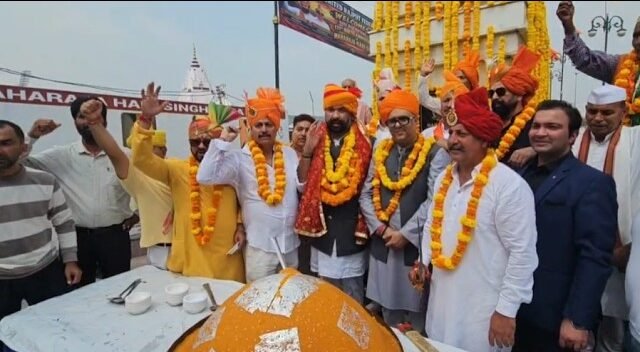
The result is a large-scale plantation drive that aims to cover the reclaimed land with thousands of trees. Recently, officials from the Jammu Municipal Corporation and the Forest Department came together to launch the initiative, marking the beginning of a long-term effort to restore ecological balance in the area.
What makes this project significant is not just the number of saplings being planted. It is the idea behind it.
Urban forests are increasingly being recognised as one of the simplest and most effective ways to make cities more liveable. Trees improve air quality, reduce heat, support biodiversity, and create natural spaces where communities can reconnect with nature. In a region that experiences rising temperatures and increasing environmental pressures, such green spaces can play an important role in building climate resilience.
For Jammu, the plantation drive represents something even deeper — proof that damaged land does not have to remain damaged forever.
Around the country, many cities are struggling with old dumpsites that occupy hundreds of acres. The Kot Bhalwal initiative offers a practical example of how these areas can be reclaimed through scientific waste treatment and then repurposed for public benefit. It is a model that other urban local bodies can study and adapt according to local conditions.
The most inspiring takeaway is also the simplest: restoration does not always require new land. Sometimes, the solution lies in healing the land we have already harmed.
Communities, local governments, and citizen groups can draw an important lesson from this effort. Whether it is a neighbourhood dumping ground, an abandoned plot, or a degraded public space, transformation often begins with a shift in perspective. When waste is treated scientifically and long-term planning is prioritised, neglected spaces can become assets once again.
For the people of Jammu, the change is already visible. A site once associated with garbage is steadily being reimagined as a green lung for the city.
And with 5,000 trees set to take root on reclaimed land, Kot Bhalwal is becoming more than an environmental project. It is becoming a reminder that even the most unlikely places can grow into something that benefits generations to come.