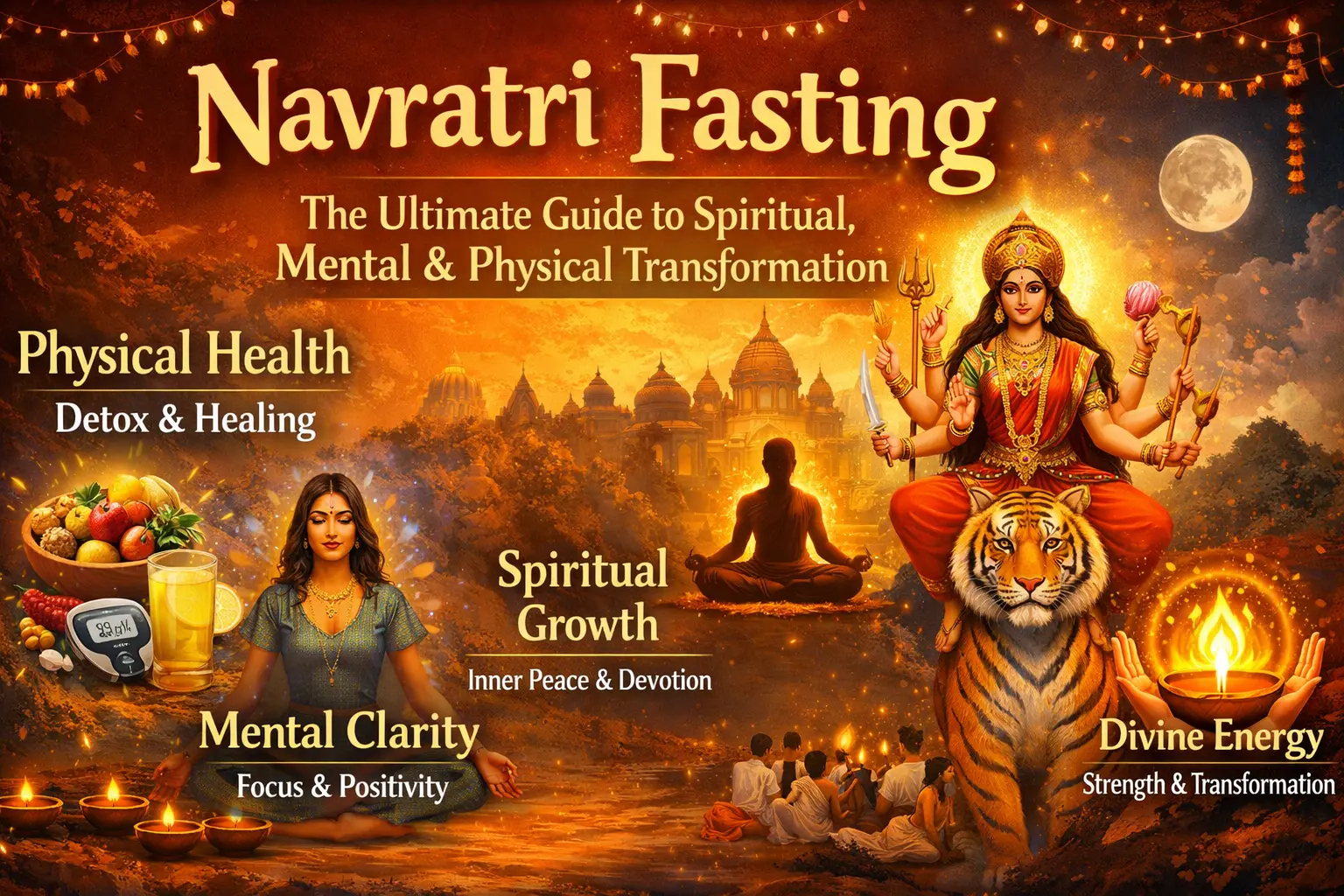
Navratri, one of the most sacred festivals in Hindu culture, is not merely a ritual—it is a powerful journey of self-discipline, purification, and spiritual awakening. Across India, millions of devotees observe fasts during these nine auspicious days, believing that this sacred practice invokes divine blessings, positivity, and prosperity.
We understand that fasting during Navratri is not governed by a rigid rulebook. Instead, it is a deeply personal spiritual choice, shaped by faith, belief, and individual capacity. Some observe fasts for all nine days, others for the first and last day, while some choose specific days with strong spiritual significance. Regardless of the approach, the intention remains the same: to purify the body and elevate the soul.
Understanding Different Types of Navratri Fasting Practices
1. Full Nine-Day Fasting
Many devotees strictly observe fasts for all nine days, consuming only permitted foods such as fruits, milk, buckwheat flour (kuttu), and water. This is considered the most disciplined and spiritually rewarding form.
2. Partial Fasting
Some individuals fast only on selected days, especially the first (Pratipada) and last (Navami) days. This approach is widely followed by those balancing work and devotion.
3. Single-Day Devotional Fast
Certain devotees observe fasting for just one day, believing that true devotion matters more than duration.
4. Couple Fasting Tradition
A unique belief exists where couples fast together for a single day, symbolizing double blessings and shared spiritual growth.

Food Discipline During Navratri: Purity Over Quantity
A significant number of devotees avoid onion, garlic, and non-vegetarian food during Navratri. This dietary discipline is rooted in the idea of maintaining sattvic purity, which enhances mental clarity and spiritual focus.
However, we must highlight a critical observation:
- Some people overconsume fasting foods, turning the practice into indulgence.
- Others maintain strict control, consuming only what is necessary.
The true essence of fasting lies in restraint, not replacement.
The Inspirational Fasting Example That Impacted Millions
During an important international visit, India’s Prime Minister observed Navratri fasts by consuming only water, tea, and lemonade. This act demonstrated the strength of Indian culture on a global stage.
This powerful example inspired countless individuals, especially youth, to embrace fasting with discipline and pride, leading to a rise in mindful and simplified fasting practices across the country.
Spiritual Activities That Define Navratri Celebrations
Navratri is not limited to fasting. It is a holistic spiritual celebration that includes:
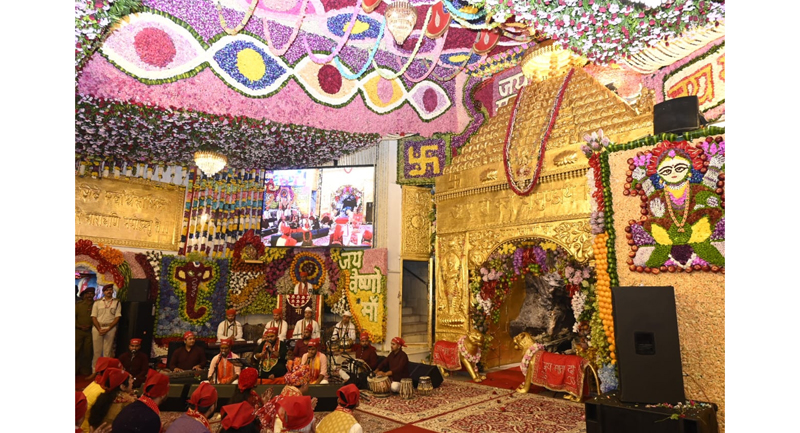
- Temple visits and darshan of Goddess Durga
- Jagrans (night-long devotional singing)
- Kanya Pujan (worship of young girls as divine forms)
- Community service and food distribution
- Meditation and prayer rituals
These activities collectively create an environment of devotion, unity, and positive energy.
Health Benefits of Navratri Fasting Backed by Logic
Fasting during Navratri offers remarkable physical health benefits, especially when practiced correctly:
1. Detoxification of the Body
Fasting allows the digestive system to rest, helping eliminate toxins accumulated from unhealthy eating habits.
2. Improved Metabolic Balance
Controlled fasting can help regulate:
- Blood sugar levels
- Cholesterol levels
- Uric acid levels
3. Boosted Immunity
Consumption of light, natural foods strengthens the immune system and enhances overall vitality.
Spiritual Benefits: Cleansing the Mind and Soul
Beyond physical health, Navratri fasting plays a vital role in spiritual transformation.
1. Elimination of Negative Thoughts
Fasting combined with devotion helps reduce:
- Stress
- Anger
- Greed
- Jealousy
2. Strengthening Willpower
Practicing restraint enhances mental discipline and focus, which translates into better decision-making in daily life.
3. Inner Peace and Divine Connection
Devotees often experience a deep sense of calmness and closeness to the divine, creating a feeling of being protected and guided.
The Hidden Problem: Modern Lifestyle and Moral Decline
In today’s fast-paced world, we often find ourselves trapped in a constant race for success, sometimes compromising ethics and values.
Common issues include:
- Consuming unhealthy and processed foods
- Engaging in stressful and competitive environments
- Adopting unethical practices for personal gain
These habits lead to both physical ailments and spiritual imbalance.
Navratri fasting acts as a reset button, helping us regain control over our body, mind, and actions.

How to Observe Navratri Fast the Right Way
To maximize the benefits of Navratri fasting, we must follow a disciplined and mindful routine:
1. Start Your Day Early
Wake up before sunrise and begin the day with gratitude and prayer.
2. Maintain Personal Hygiene
A fresh bath symbolizes purity and readiness for spiritual practices.
3. Practice Meditation Twice Daily
Meditation in the morning and evening enhances spiritual awareness and mental peace.
4. Consume Detoxifying Drinks
Include lemonade at least twice a day to help cleanse the body and maintain hydration.
5. Eat Mindfully
Focus on:
- Light, sattvic foods
- Limited quantity
- Natural ingredients
6. Avoid Negative Actions
The most important aspect of fasting is moral discipline. Avoid:
- Lying
- Cheating
- Anger
- Greed
- Violence
- Gossip
True fasting is as much about purity of actions as it is about food.
Why Navratri Comes Twice a Year: A Divine Opportunity
Navratri comes from Sanskrit—nava (nine) and ratri (nights)—but it represents far more than a time period. Spiritually, “night” symbolizes inward reflection, making Navratri a journey through nine stages of inner transformation. These phases guide individuals from confusion to clarity and balance.
Observed as Chaitra Navratri (spring) and Sharad Navratri (autumn), both occur during seasonal transitions (sandhi kaal), when mind and body are more sensitive. Through fasting, discipline, and Goddess worship (Shakti), devotees align with transformative energy, turning instability into growth, balance, and spiritual renewal. Thus, navratri occurs twice annually, offering us two powerful opportunities to:
- Detoxify our body
- Cleanse our mind
- Reconnect with our spiritual self
This cyclical practice ensures that we remain balanced and grounded throughout the year.
The Ultimate Purpose of Navratri Fasting
The real goal of Navratri fasting is not just ritualistic observance. It is about:
- Self-control
- Spiritual growth
- Moral upliftment
- Holistic well-being
When practiced correctly, fasting transforms us into healthier, calmer, and more conscious individuals.
Make Navratri Truly Meaningful
Navratri is a sacred invitation to pause, reflect, and realign our lives. By observing fasts with sincerity, discipline, and devotion, we unlock a powerful pathway to physical health, mental clarity, and spiritual enlightenment.
We must embrace Navratri not as a routine ritual, but as a life-enhancing practice that brings us closer to our true self and the divine.
Let us use these nine auspicious days wisely and transform our lives with purity, positivity, and purpose.