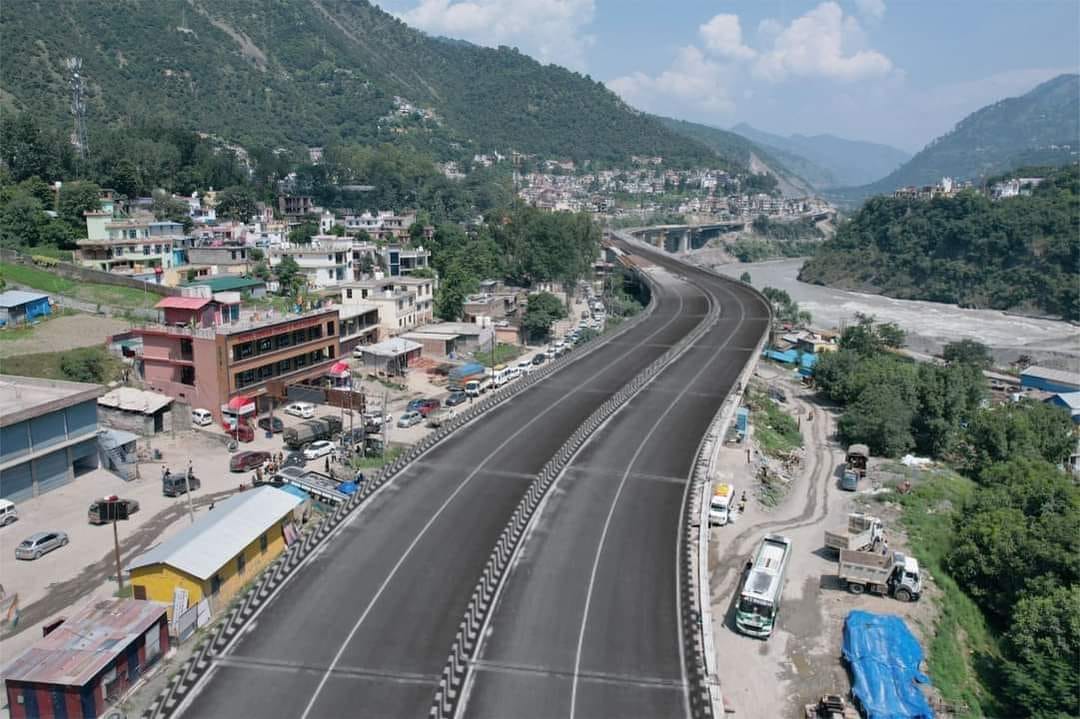
Jammu & Kashmir is on the verge of a major connectivity upgrade. The Delhi Amritsar Katra Expressway (DAK) Expressway, one of the country’s most ambitious highway projects, is moving steadily toward completion. According to senior officials from the National Highways Authority of India (NHAI), the corridor is expected to be fully operational by March 2027. The Total Capital Cost (Rs crs): 3044.02 and Actual Start Date/ Appointed Date of Delhi–Amritsar–Katra (DAK) Expressway is 26-09-2022.
This isn’t just another road project. Think of it as a high-speed artery that will reshape how people, goods, and pilgrims move across the region.
What is the Delhi–Amritsar–Katra Expressway?
The DAK Expressway is a high-speed, access-controlled greenfield corridor designed to connect Delhi directly with Amritsar and Katra. Once complete, it will become the fifth major expressway developed in India, joining the league of modern, world-class highways.
Why This Project Matters
Why is everyone talking about this expressway?
Because it promises dramatic improvements:
- Shorter travel distance
- Faster journey times
- Better road safety
- Stronger economic links
In simple words, it’s set to change the travel game in North India.
Key Highlights of the Expressway
Reduced Distance and Travel Time
One of the biggest advantages of the DAK Expressway is the massive cut in travel time.
- Current distance (Delhi to Katra): 727 km
- New distance after expressway: 588 km
- Current travel time: ~14 hours
- Expected travel time: ~6 hours
That’s more than half the time saved. Imagine leaving Delhi in the morning and reaching Katra comfortably the same day.
Access-Controlled High-Speed Corridor
This isn’t your typical highway with frequent crossings and local traffic. The expressway is fully access-controlled, meaning:
- Limited entry and exit points
- No random crossings
- Higher design speeds
- Improved safety standards
In short, smoother, faster, and safer journeys.
Major Benefits of the Project
Boost to Religious Tourism
The expressway will directly connect two of the most important pilgrimage destinations in North India:
- Sri Harmandir Sahib in Amritsar
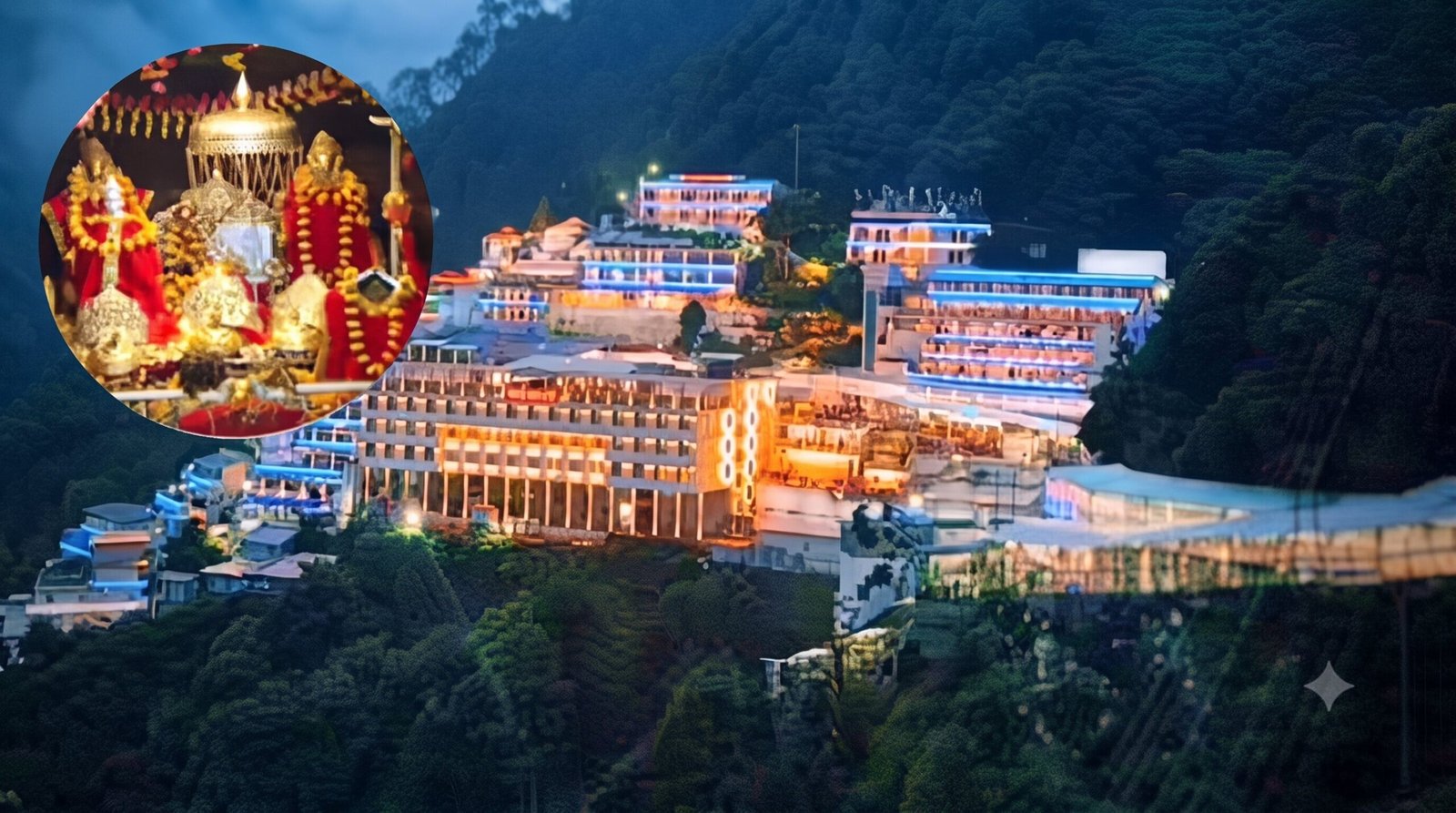
- Shri Mata Vaishno Devi in Reasi district
For millions of devotees who travel every year, this corridor will be a blessing. Pilgrimage circuits will become faster, more comfortable, and more reliable.
Economic and Trade Advantages
But the benefits don’t stop at tourism.
The corridor is expected to:
- Reduce logistics costs
- Improve supply chains
- Support agricultural transport
- Help industrial movement
Key commodities like apples, agricultural produce, and cement will move faster and cheaper. For businesses, time saved equals money earned.
Improved Regional Connectivity
The expressway will strengthen links between:
- Delhi NCR
- Punjab industrial belt
- Jammu & Kashmir
This improved connectivity can spark new investments, warehousing hubs, and logistics parks along the route.
Detailed Breakdown of Jammu & Kashmir Phase II
In Jammu & Kashmir, Phase II of the project includes three important packages. These are being executed under the Hybrid Annuity Model (HAM), a public-private partnership approach that balances risk between the government and private developers.
Overview of Hybrid Annuity Model (HAM)
Under HAM:
- Government shares project cost
- Private players handle construction
- Payments are linked to performance
This model helps speed up infrastructure development while maintaining quality.
Balsua to Hiranagar
This is one of the major stretches in the J&K segment.
Key facts:
- Length: 44.60 km
- Location: Balsua (Pathankot) to Hiranagar (Kathua)
- Total cost: ₹3,044.02 crore
- Civil cost: ₹1,939 crore
- Work started: 26 September 2022
- Physical progress: 81.60%
- Target completion: 31 May 2026
Work on this package is progressing steadily and is already past the 80% mark.
Hiranagar to Raya Morh
The second package continues the connectivity deeper into the Jammu region.
Key facts:
- Length: 35.15 km
- Total cost: ₹2,714.95 crore
- Civil cost: ₹1,870 crore
- Work started: 26 September 2022
- Physical progress: 88.50%
- Target completion: 31 July 2026
With nearly 90% work done, this stretch is among the fastest-moving segments.
Raya Morh to Kunjwani
This is considered the most crucial package for Jammu city connectivity.
Key facts:
- Length: 20.38 km
- Total cost: ₹1,917.32 crore
- Civil component: ₹1,765 crore
- Work started: 27 September 2022
- Physical progress: 92.53%
- Target completion: 20 June 2026
This package includes some very strategic infrastructure additions.
Special Infrastructure Features
Jammu Airport Spur
Package 16 includes a dedicated 7 km spur to the new Jammu Airport terminal. This will significantly improve airport accessibility for travelers coming via the expressway.
For frequent flyers and tourists, this means smoother last-mile connectivity.
Tawi 4th Bridge Connectivity
Another major feature is the Tawi 4th Bridge, which will ease congestion around Jammu city and improve traffic flow across the river.
Additionally, there is a 1.2 km extension toward Jammu city, further strengthening urban connectivity.
Project Timeline and Progress
Current Completion Status
According to NHAI officials, the J&K packages have achieved impressive progress levels:
- Package 14: 81.60%
- Package 15: 88.50%
- Package 16: 92.53%
These numbers indicate that the project is well into the advanced construction stage.
Final Target – March 2027
Despite some early hurdles, authorities remain confident that the entire Delhi–Amritsar–Katra Expressway will be completed by March 2027.
Challenges Faced During Construction
No mega infrastructure project is ever completely smooth. The DAK Expressway also faced its share of hurdles.
Land Acquisition Issues
One of the biggest early challenges was obtaining encumbrance-free land. Land acquisition often slows highway projects, and this corridor was no exception.
Weather and Flood Disruptions
Extreme weather events and floods disrupted construction schedules and logistics at multiple points.
In regions like Jammu & Kashmir, weather can be unpredictable — and infrastructure work must adapt accordingly.
Security-Related Restrictions
Temporary operational restrictions during Op Sindoor also impacted project timelines. Such security-related pauses are sometimes unavoidable in sensitive regions.
How Authorities Are Keeping the Project on Track
Despite the obstacles, NHAI has taken several corrective steps:
- Enhanced resource mobilization
- Better contractor coordination
- Close stakeholder monitoring
- Design refinements
These measures have helped maintain the overall March 2027 completion target.
Impact on Local Economy and Employment
Large expressway projects are not just about roads — they are economic engines.
During construction and after completion, the DAK corridor is expected to:
- Generate thousands of jobs
- Boost roadside businesses
- Encourage logistics parks
- Promote tourism-based employment
For local youth in Jammu & Kashmir and Punjab, this could open up significant opportunities.
Strategic Importance for Border Areas
The expressway also has strategic value.
Improved road infrastructure near border regions enhances:
- Defense mobility
- Emergency response
- Supply chain resilience
- Strategic preparedness
In sensitive northern regions, such connectivity upgrades carry both economic and national importance.
Future of High-Speed Expressways in India
India is rapidly building a modern expressway network, and the Delhi–Amritsar–Katra corridor is a key piece of that puzzle.
As more access-controlled highways come online, we can expect:
- Faster inter-city travel
- Lower logistics costs
- Better road safety
- Stronger regional integration
The Delhi–Amritsar–Katra Expressway is not just a road — it’s part of India’s long-term infrastructure transformation.
The Delhi–Amritsar–Katra Expressway is shaping up to be a game-changer for North India. By slashing travel time from 14 hours to about 6 hours and improving connectivity between major religious and economic centers, the corridor promises wide-ranging benefits.
While the project did face hurdles like land acquisition delays, weather disruptions, and security restrictions, steady progress across all three J&K packages shows strong momentum. With completion targeted for March 2027, the expressway is poised to boost tourism, trade, employment, and strategic connectivity in the region.
If execution continues at the current pace, travelers in the near future may find the journey from Delhi to Katra not just shorter — but dramatically smoother and safer.
FAQs
1. When will the Delhi–Amritsar–Katra Expressway be completed?
The expressway is targeted for full completion by March 2027, according to NHAI officials.
2. How much travel time will the expressway save?
Travel time between Delhi and Katra is expected to reduce from about 14 hours to nearly 6 hours.
3. What is the new distance between Delhi and Katra?
The distance will shrink from 727 km to approximately 588 km once the expressway is operational.
4. Which religious sites will benefit the most?
The corridor will significantly improve access to Sri Harmandir Sahib in Amritsar and Shri Mata Vaishno Devi in Reasi district.
5. What model is being used for construction in J&K?
The Jammu & Kashmir packages are being executed under the Hybrid Annuity Model (HAM), a public-private partnership framework.