Located in Pacca Danga in Jammu’s Old City, Dewan Mandir is among the city’s historic religious and cultural landmarks. Dedicated to Shri Lakshmi Narayan Ji Maharaj, the temple was constructed in 1867 by Dewan Jawala Sahai, who served as Prime Minister under Maharaja Gulab Singh and later Maharaja Ranbir Singh.
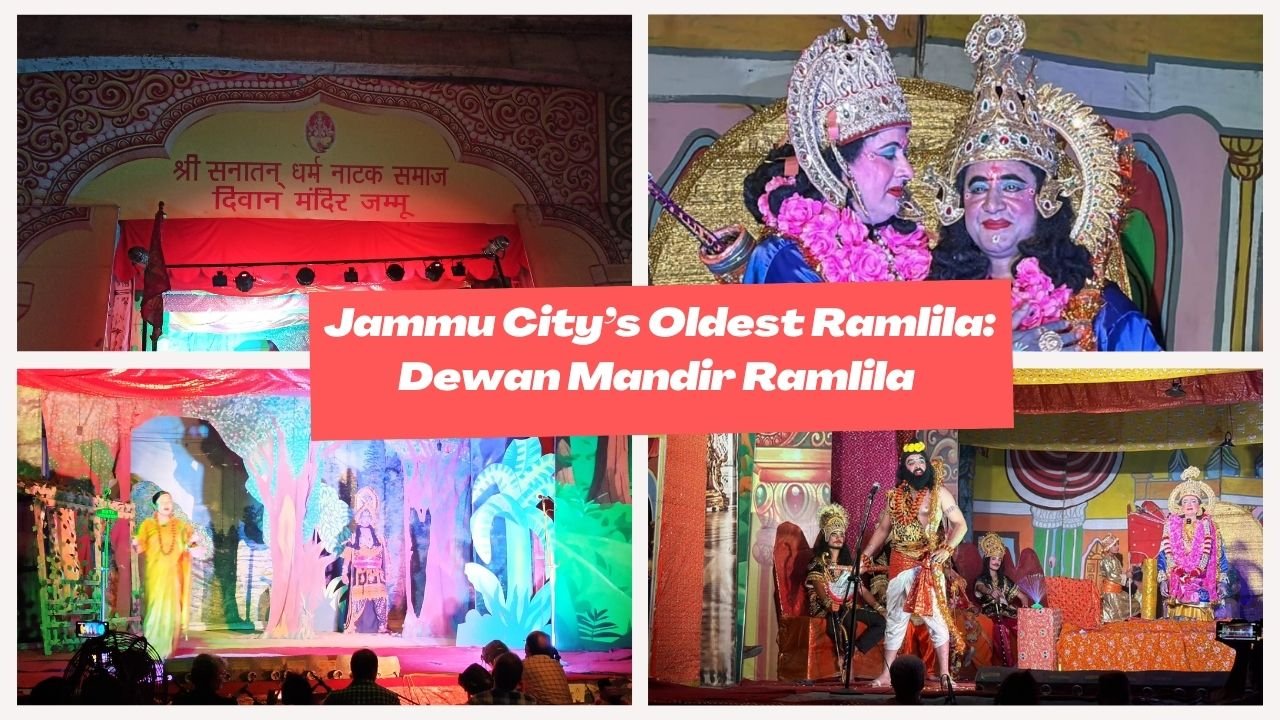
For generations, the temple has remained an important centre of religious observance and cultural activity. Its annual Ramlila, organised by the Sanatan Dharam Natak Samaj (SDNS), is a longstanding tradition associated with Navratri and Dussehra celebrations in Jammu.
The Ramlila at Dewan Mandir has been performed for nearly 160 years, according to accounts of the tradition. It continues to attract residents of the Old City and visitors interested in Jammu’s religious practices, theatre and cultural history.
An Eight-Day Dewan Mandir Ramlila During Navratri
The annual Ramlila is organised during Navratri at the premises of the Sanatan Dharam Natak Samaj in Dewan Mandir. The eight-day programme presents episodes from the Ramayana through stage performances, dialogue, music and devotional singing, concluding around Dussehra.
Artists portray key characters and events from the epic, including episodes associated with Lord Rama, Mata Sita, Lakshman, Hanuman and Ravana. The performances combine religious storytelling with traditional theatre, preserving a form of public cultural expression that has remained part of Jammu’s festive calendar for generations.
The programme has featured artists and singers from different backgrounds. Attendance by hundreds of spectators has been associated with the annual performances, reflecting the continued local interest in the tradition.
Ram Leela will start from 08:00 PM every evening till Vijay Dashmi.
Location Details: Dewan Mandir, Pacca Danga, Old Heritage City, Jammu, Jammu and Kashmir 180001
A Stage Associated With Dogra Art and Theatre
Dewan Mandir’s stage, locally referred to as a mandua, holds a place in Jammu’s cultural memory. The Sanatan Dharam Natak Samaj is associated with the preservation of traditional theatre and the presentation of religious narratives through live performance.
The venue is also linked in local cultural accounts to the wider artistic heritage of Jammu. Names associated with the region’s performing arts include K. L. Saigal, Om Prakash, Ustad Alla Rakha, Mallika Pukhraj and Pandit Shiv Kumar Sharma. Prithviraj Kapoor has also been associated with references to Dewan Mandir in accounts of his connection with theatre and performance.
These associations reflect the wider significance of traditional performance spaces in the cultural life of Jammu. However, individual appearances and specific historical links to the Dewan Mandir stage require documentary verification.

A Community Tradition Across Generations
One of the distinguishing features of Dewan Mandir’s Ramlila has been the participation of people from different professions and sections of society. Local accounts describe performers who have included government employees, business owners, farmers, wrestlers and bankers.
The tradition has provided a platform for people whose professional lives may otherwise have little connection with theatre. Through rehearsals and annual performances, participants have helped sustain the Ramlila as a community-led cultural activity.
The portrayal of female characters is another aspect of the tradition’s history. Accounts of earlier performances recall women taking the roles of characters such as Mata Sita, rather than these roles being performed exclusively by men. Historical recollections also refer to separate performances or arrangements for women and men, locally described as janana and mardana.
Such practices form part of the social history surrounding the Ramlila and offer insight into how public religious performances were organised and experienced by audiences in earlier generations.
An Enduring Part of Old Jammu’s Festive Life
For many residents, attending the Ramlila at Dewan Mandir has been a recurring part of the Navratri season. Families have returned to the venue over the years, connecting religious observance with memories of childhood, neighbourhood gatherings and the shared experience of live theatre.
The tradition also highlights the role of community institutions in maintaining Jammu’s cultural heritage. While forms of entertainment and public celebration have changed, the annual Ramlila continues to provide a setting for the retelling of the Ramayana through performance.
Dewan Mandir’s location in the historic lanes of Pacca Danga further connects the event with the social and cultural life of Jammu’s Old City. Its significance extends beyond the temple premises to the people who have participated in, watched and supported the performances across generations.
Preserving Jammu’s Living Cultural Heritage
The Ramlila at Dewan Mandir remains an important example of Jammu’s continuing religious and theatrical traditions. Its long association with Navratri, Dussehra and community participation makes it a notable part of the city’s cultural identity.
Documenting the history of the Sanatan Dharam Natak Samaj, preserving photographs and performance records, and recording the recollections of senior artists and residents could help establish a more detailed history of the tradition. Such documentation would also support efforts to preserve Jammu’s historic performance spaces and pass their cultural significance on to younger generations.
For visitors exploring Jammu’s heritage, Dewan Mandir offers an opportunity to experience a longstanding tradition rooted in religious storytelling, community participation and Dogra cultural life.