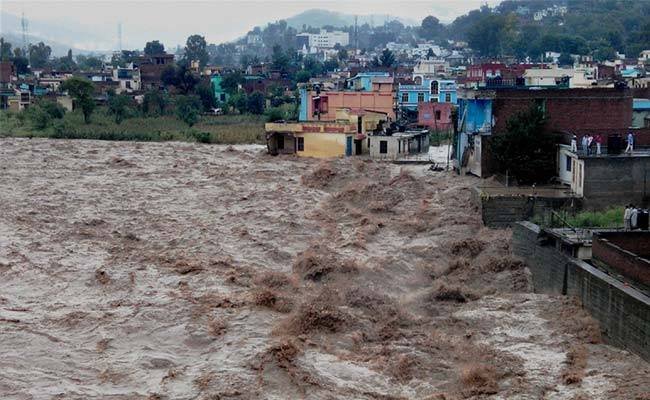
The devastating floods of 2014 left what officials now describe as an unprecedented trail of destruction across Jammu and Kashmir, damaging more than 1.6 lakh residential, commercial, and public structures across both divisions of the Union Territory.
The grim details emerged a decade later in the Legislative Assembly after a question raised by MLA Mubarik Gul, prompting the Disaster Management, Relief, Rehabilitation and Reconstruction Department to place official data on record.
According to the government’s assessment, the 2014 floods caused widespread damage to housing, businesses, and essential infrastructure. Specially constituted committees conducted detailed surveys after the disaster, following which relief and compensation were provided to affected families as per approved norms.
The official figures reveal the scale of the catastrophe:
- 21,900+ houses were completely destroyed
- Over 51,000 houses were severely damaged
- Around 43,600 houses suffered partial damage
- More than 43,800 huts and cattle sheds were affected
- Nearly 20,800 commercial and other buildings were damaged
In total, over 1.6 lakh structures were impacted, disrupting daily life, livelihoods, and economic activity across the region.
The government also flagged a long-standing vulnerability: the Kashmir Valley depends on a single major drainage channel—the River Jhelum, which has a limited carrying capacity.
Officials informed the Assembly that:
- The Jhelum basin has witnessed 34 major floods since 1800
- On average, the Valley faces one major flood every six years
- Recurrent flooding is a historical pattern, not an isolated event
This reality continues to put the region at high risk during extreme weather events.
In response to the 2014 disaster, the government approved both short-term and long-term flood mitigation plans, with a strong focus on the flood-prone Kashmir Valley.
These measures include river management, embankment strengthening, improved drainage systems, and disaster preparedness initiatives. Officials said large-scale flood management works are still underway, underscoring that recovery and prevention remain ongoing challenges even a decade later.
More than ten years after the floods, the Assembly disclosure serves as a stark reminder of the human and economic cost of natural disasters in Jammu and Kashmir. With climate risks increasing and floods recurring, the government’s focus remains on preventing a repeat of the devastation witnessed in 2014.