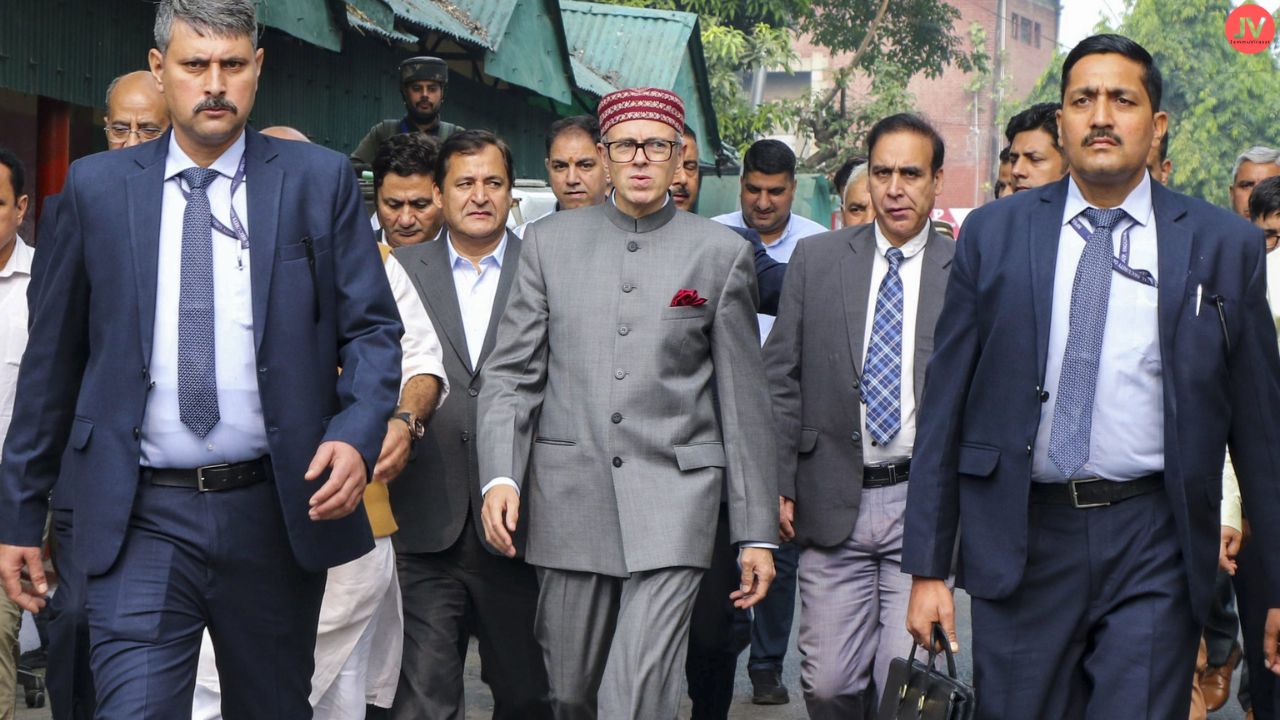
The Omar Abdullah-led National Conference (NC) government has completed its first year in office in Jammu and Kashmir on October 16, marking a year filled with both progress and political challenges. Despite a decisive electoral victory, many of Abdullah’s major promises — especially the restoration of J&K’s statehood — remain unfulfilled, sparking debates and criticism across the Union Territory.
A Year Since the Return of Omar Abdullah: A Political Recap
After nearly a decade, the National Conference made a powerful comeback in last year’s assembly elections, winning a landslide mandate. Omar Abdullah was sworn in as the first Chief Minister of the Union Territory of Jammu and Kashmir on October 16. His campaign slogan, built around the party manifesto “Dignity, Identity, and Development,” inspired optimism for change and restoration of the region’s lost status.
However, as the administration completes a year, the promise of restoring autonomy and statehood continues to loom large over the government’s credibility.
Unfulfilled Promises: Autonomy and Restoration of Statehood
One of the core commitments of the NC government was the restoration of J&K’s pre-August 5, 2019 status, including Articles 370 and 35A, which granted special rights to the region. The manifesto also vowed to seek full implementation of the 2000 Autonomy Resolution and push for amending or repealing post-2019 laws that diluted J&K’s unique position.
The NC further pledged to redraw the Jammu and Kashmir Reorganisation Act, 2019, and modify the Transaction of Business Rules to empower local governance. Yet, after a year in power, most of these political promises remain unfulfilled.
The only concrete steps include:
- A cabinet resolution calling for the restoration of statehood.
- A legislative resolution urging the Centre to establish a constitutional mechanism for reinstating the special status of Jammu and Kashmir.
Despite these symbolic actions, no significant legislative or constitutional progress has been made toward achieving these goals.
Growing Discontent: Criticism from Within and Outside
The Abdullah government is facing mounting criticism — not only from opposition parties but also from within the National Conference itself.
Several valley-based leaders accuse the government of appeasing New Delhi and the BJP while neglecting its political promises.
Ruhullah Mehdi, NC’s Member of Parliament from Srinagar, publicly acknowledged the government’s shortcomings, stating,
“Whatever needed to be done on the political front has not happened. There was a need to show intent, but I personally feel that has not been shown till now.”
This internal rift highlights the widening gap between the party’s political vision and its administrative execution.
Development Measures: Social Welfare and Economic Relief
While critics focus on the political front, the ruling NC government insists it has delivered significant people-centric initiatives despite limited constitutional powers under Union Territory status.
Some of the key welfare measures include:
- Increasing the marriage assistance fund from ₹50,000 to ₹75,000 for economically weaker brides.
- Launching free bus services for women across districts and introducing inter-district smart bus connectivity.
- Restoring the academic calendar to the traditional October–November session.
- Offering stamp duty relaxation for property transfers among blood relatives.
- Providing free ration to vulnerable sections of society.
The government claims these measures have improved everyday life for citizens, especially for marginalized communities.
Read also: BJP vs NC: Rajya Sabha Elections Jammu & Kashmir
Challenges That Defined the First Year
The first year of the Abdullah administration has been marked by political, economic, and natural crises that slowed down governance and progress.
1. Security Concerns and the Pahalgam Terror Attack
The Pahalgam terror attack on April 22 dealt a heavy blow to J&K’s fragile peace and tourism industry. The subsequent India-Pakistan tensions and Operation Sindoor further disrupted life in border regions, leading to casualties and displacement.
2. Tourism Collapse and Floods
As the government tried to revive tourism, unseasonal rains and flash floods ravaged the valley, compounding economic losses. Tourism-dependent families, hotel owners, and artisans continue to face severe hardships.
3. The Reservation Policy Debate
Another pressing issue has been the reservation policy controversy, which reduced the general category quota to 30% in government jobs and educational institutions.
After intense student protests, a cabinet subcommittee was established in December to review the policy. However, even after submitting its report four months ago, the government has yet to take any decisive action, drawing further criticism from youth and civil society groups.
Power Division and Administrative Constraints
Chief Minister Omar Abdullah frequently cites the power imbalance between the elected government and the Lieutenant Governor’s office as a key limitation. As a Union Territory, J&K’s elected leadership lacks full control over critical departments like home affairs, security, and land policy, restricting its ability to make autonomous decisions.
This administrative overlap has slowed down reforms and frustrated both policymakers and citizens.
Looking Ahead: The Road to Restoring Trust
As the Jammu and Kashmir government enters its second year, expectations remain high for tangible progress on the statehood restoration agenda. The administration must also focus on rebuilding economic stability, tourism confidence, and political credibility among the masses.
To regain public trust, the Omar Abdullah government will need to:
- Deliver visible outcomes on autonomy and statehood restoration.
- Finalize decisions on reservation reforms.
- Accelerate economic recovery initiatives post-flood and post-conflict.
- Strengthen law and order to ensure long-term peace.
The first year of Omar Abdullah’s government in Jammu and Kashmir has been a blend of hope and hesitation. While welfare schemes have offered temporary relief to citizens, the core political aspirations — especially the restoration of statehood and special status — remain far from realization.
Click here to check Manifesto 2024 – Jammu Kashmir National Conference
As Abdullah’s administration steps into its second year, the real test lies in translating promises into policy, rebuilding trust, and redefining the political future of Jammu and Kashmir.