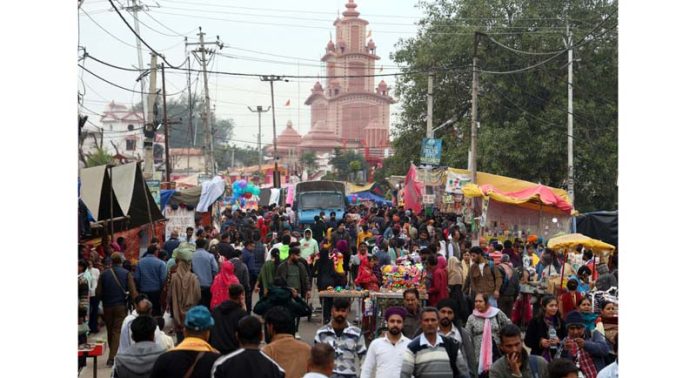
Every year, thousands of pilgrims, families, and traders descend upon the grounds of Jhiri Mela in Jammu — not just for devotion and celebration, but for an experience that has quietly transformed into one of North India’s most efficiently managed cultural festivals.
And now, for the first time, the numbers are out — and they tell a remarkable story.
The Big Number: ₹2.14 Crore and a Festival That Paid for Itself
The Jammu and Kashmir Tourism Department has revealed before the J&K Legislative Assembly that the annual Jhiri Mela generated a total income of over ₹2.14 crore, with expenditure figures almost perfectly matching the revenue.
That’s not just a balanced budget — that’s a blueprint.
In an era where public festivals often bleed government funds and accountability remains murky, Jhiri Mela stood out as a fully structured, transparent festival economy — one where every stall, every stage light, and every e-rickshaw was planned, tendered, and accounted for.
How the Money Was Made: Fair, Open, and Competitive
The revenue side of Jhiri Mela was no free-for-all. Commercial space for shops, stalls, swings, and rides was allocated through a strict open tendering process, managed by a dedicated Allotment Committee that demarcated zones based on a pre-approved layout plan.
This ensured:
- Local traders and businesses got fair access to commercial space
- Revenue generation remained transparent and competitive
- The mela site maintained aesthetic order and public safety
Multiple departments and security agencies coordinated the ground-level execution — a logistical feat that rarely gets the recognition it deserves.
Where Did ₹2.14 Crore Go? A Complete Breakdown
Here’s the part that makes Jhiri Mela genuinely newsworthy — the detailed, department-wise expenditure that the government placed on record:
Culture & Events
- Cultural programmes: ₹1,75,000
- Total cultural events head: ₹2,08,045
- Stage, sound & lighting (inauguration): ₹8,00,000
Jammu’s cultural soul was front and centre — and the budget reflected it.
Infrastructure & Development
- Modular passenger sheds: ₹20,00,369
- Road & pathway maintenance, bush cutting, CCTV installations, police control rooms — all covered under dedicated infrastructure heads
This is where the bulk of spending went, and rightly so. Pilgrim comfort and crowd safety were non-negotiable priorities.
Sanitation & Public Health
- Sanitation works: ₹6,48,500
- Public Health Engineering Department: ₹5,74,000
Clean facilities at a mass gathering of this scale are a massive undertaking — and the figures show the government took it seriously.
Power & Connectivity
- Power Department allocation: ₹9,96,000
Keeping a mela of this magnitude lit — literally — requires substantial investment.
Roads & Civil Works
- Public Works Department: ₹6,17,188
Smooth access routes aren’t glamorous, but they’re what separate a safe festival from a chaotic one.
Security & Communication
- Security arrangements + public address systems: ₹1,88,135
Crowd management and real-time communication — critical pillars of any large public event.
Inclusion & Accessibility
- E-rickshaw services for persons with disabilities: ₹45,000
- Volunteer equipment: ₹10,500
A small but powerful detail — Jhiri Mela was designed to be accessible, not just for the able-bodied majority.
Pilgrim Facilities
- Tent houses for pilgrims: ₹2,49,200
- Food courts, felicitation programmes & culmination ceremony: separately allocated
Outreach & Administration
- Information & publicity: ₹75,000
- Logistics: ₹56,000
- Administrative costs: ₹1,29,500
- Miscellaneous: ₹1,37,712
Beyond the Numbers: A Festival That Drives Real Livelihoods
The J&K government made a point of highlighting something that raw financial figures can miss — Jhiri Mela is an economic engine for ordinary people.
Traders, local vendors, transport operators, tent suppliers, food stall owners, and daily-wage workers all participate in and benefit from the mela’s ecosystem. The structured commercial framework didn’t just protect government revenue — it created livelihood opportunities across the value chain during the festival period.
This is the kind of community-linked tourism model that urban planners and policy experts often advocate for in theory. Jhiri Mela is living proof that it works in practice.
India hosts thousands of religious and cultural fairs every year. Most operate in a financial grey zone — income untracked, spending unaccounted, and outcomes unmeasured.
Jhiri Mela’s transparent accounting model — tabled in a legislative assembly and open to public scrutiny — sets a standard that other state governments would do well to study and replicate.
When festivals generate revenue, protect culture, include persons with disabilities, empower local traders, and balance their books — that’s not just good festival management. That’s good governance.