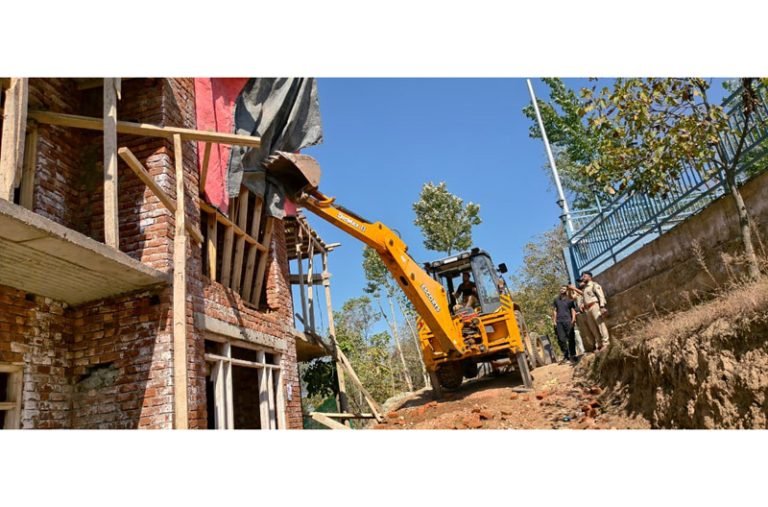
The government of Jammu and Kashmir reported that about 1,425 residential and commercial structures were demolished across the region between October 2024 and early 2026. The information was shared in the Legislative Assembly through a written reply by the Housing and Urban Development Department.
This development has drawn attention to the broader issues of unauthorised construction, land encroachment, and enforcement mechanisms in the Union Territory. Rather than viewing the numbers in isolation, it is important to understand the legal framework, administrative process, and structural challenges behind such demolition drives.
Scale of Demolitions Across Regions
According to official data, the Kashmir Division accounted for 1,159 demolitions, significantly higher than the Jammu Division. The district of Srinagar recorded the largest number of actions.
In Srinagar alone, authorities demolished 1,088 structures, including 1,014 residential buildings and 74 commercial properties. Multiple agencies carried out the operations, reflecting coordinated enforcement efforts against encroachments and unauthorised construction.
Other districts in the Kashmir region reported relatively smaller numbers. Bandipora saw over 100 demolitions, while districts such as Budgam, Baramulla, Kupwara, Shopian, and Kulgam recorded only a few cases each. Anantnag reported removal of commercial structures through the Pahalgam Development Authority.
By comparison, the Jammu Division witnessed fewer demolitions overall.
Situation in the Jammu Division
In Jammu district, authorities demolished 266 structures, including both residential and commercial buildings. Several agencies — including the municipal corporation, development authorities, and revenue officials — were involved in the process.
Other districts in the division reported limited action. Kathua recorded seven demolitions, Udhampur three, and Ramban 19 structures. Many of the Ramban cases were linked to projects undertaken by the National Highways Authority of India.
Legal Framework Behind Demolition Drives
Officials stated that all actions followed established legal procedures. Encroachments on public land are addressed under the Jammu and Kashmir Public Premises (Eviction of Unauthorized Occupants) Act, 1988. Meanwhile, unauthorised constructions fall under the Control of Building Operations (COBO) Act.
These laws empower authorities to remove illegal structures while ensuring procedural safeguards. Typically, the process involves:
- Issuance of formal notices
- Providing occupants reasonable time to respond
- Verification by revenue authorities
- Final action such as sealing or demolition
Authorities maintain that anti-encroachment drives are conducted regularly to protect public land and enforce urban planning norms.
Why Do Unauthorised Structures Still Appear?
Despite strict regulations, unauthorised construction continues to emerge in many urban and semi-urban areas. The government cited several practical challenges that delay enforcement:
- Legal disputes and court interventions
- Delayed or insufficient police support
- Construction carried out during odd hours
- Deviations from approved building plans
These factors can allow illegal structures to come up before authorities intervene. Urban expansion and population pressure also contribute to the problem in fast-growing districts.
Case-Specific Clarifications
The government also addressed queries regarding the demolition of a house reportedly linked to journalist Arfaz Ahmad Daing. Officials stated that notices under the Public Premises Act were served and verification was conducted with revenue authorities before the action.
According to the official reply, the individual concerned had submitted a written statement declaring no connection with the land or property. Authorities maintained that due process was followed.
A key concern in demolition drives is whether affected families receive compensation or alternative land. The government clarified that no proposal exists to provide compensation or free land in such cases.
This position reflects the legal principle that structures built in violation of land or building laws are not eligible for rehabilitation benefits. However, the issue often raises broader debates about urban planning enforcement and housing regulation.
The recent figures highlight the ongoing challenge of balancing urban growth with regulatory compliance in Jammu and Kashmir. As cities expand, authorities face increasing pressure to monitor land use, enforce building norms, and prevent encroachments on public property.
Strengthening early detection systems, improving coordination among agencies, and increasing public awareness about building approvals may help reduce future violations.